
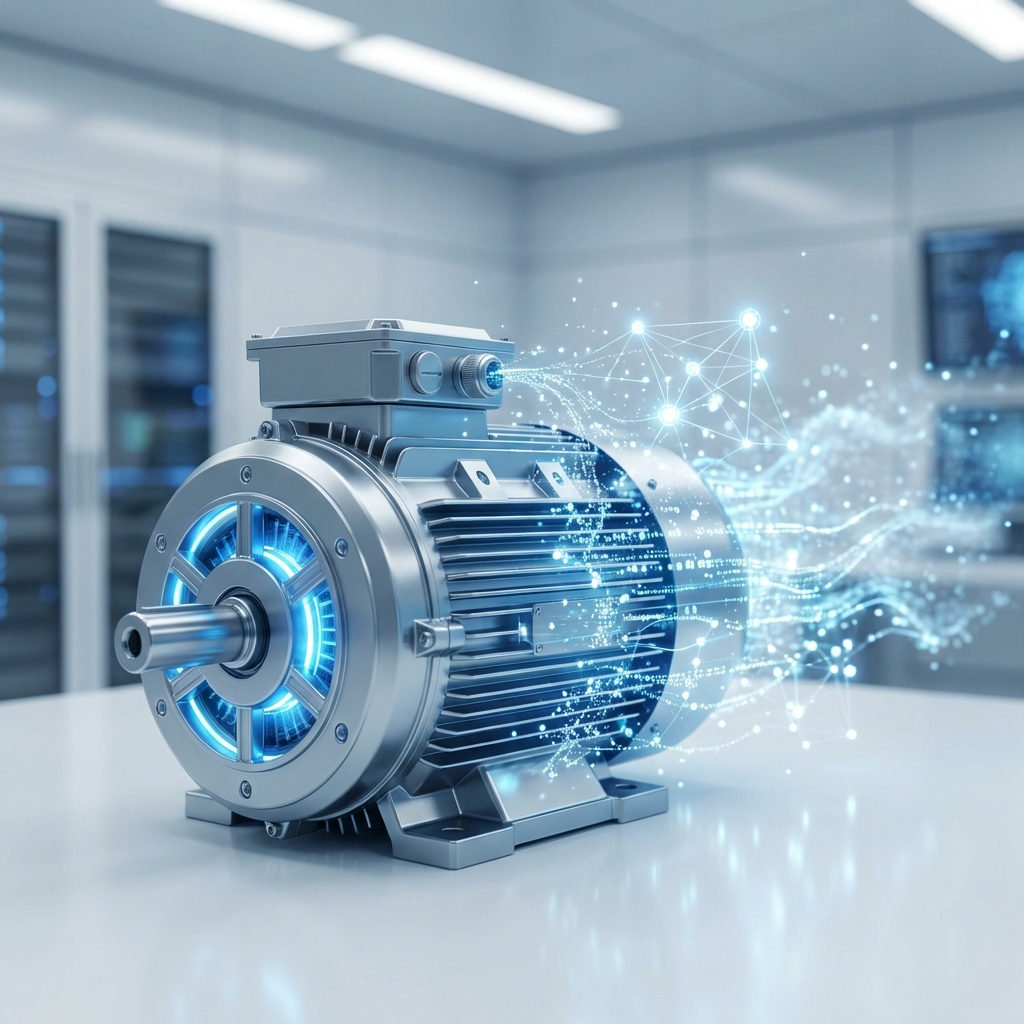
For more than a century, electric motors have been elegantly simple machines: apply electrical power, generate mechanical motion. Their reliability came from mechanical robustness and straightforward design. Their limitation? Complete lack of intelligence.
A traditional motor knows nothing about itself. It can't tell you if bearings are wearing, if windings are overheating, or if mechanical loads are increasing. It operates until it fails—and then, often catastrophically, it stops. Maintenance strategies were necessarily reactive (fix when broken) or preventive (service on fixed schedules regardless of actual condition).
This paradigm is ending.
The convergence of artificial intelligence, Industrial Internet of Things (IIoT), and advanced motor design is creating a new category of equipment: intelligent motor systems that monitor their own health, predict failures, optimize performance, and continuously adapt to operating conditions.
This transformation isn't just technological evolution—it's a fundamental paradigm shift changing how industries approach reliability, efficiency, and operational excellence.
From Mechanical Devices to Intelligent Systems
The transition from "dumb" motors to intelligent systems required three technological convergences:
1. Sensor Integration
Modern motor systems incorporate comprehensive sensor arrays:
- Vibration Sensors: Detect bearing wear, shaft misalignment, mechanical imbalance
- Temperature Sensors: Monitor winding temperatures, bearing heat, ambient conditions
- Current Sensors: Measure electrical signatures revealing mechanical and electrical faults
- Position/Speed Sensors: Track shaft position, rotational velocity, acceleration
- Environmental Sensors: Assess humidity, contamination, corrosive atmospheres
These sensors generate continuous high-frequency data streams—capturing thousands of measurements per second—creating unprecedented visibility into motor operation.
2. Edge Computing
Raw sensor data is valuable only if analyzed intelligently. Modern motor systems incorporate edge computing capabilities—processing data at or near the motor itself rather than transmitting everything to cloud systems. Edge AI enables:
- Real-Time Response: Immediate adjustments to operating parameters without network latency
- Bandwidth Efficiency: Processing locally, transmitting only relevant insights
- Offline Operation: Continued intelligence even when network connectivity is unavailable
- Latency-Sensitive Control: Millisecond-level response times for critical applications
3. Machine Learning Models
The true intelligence comes from machine learning algorithms that transform raw sensor data into actionable insights:
- Anomaly Detection: Identifying deviations from normal operating patterns
- Failure Prediction: Forecasting when components will reach end of useful life
- Pattern Recognition: Detecting subtle signatures indicating specific failure modes
- Optimization: Continuously adjusting parameters to maximize efficiency
- Adaptive Control: Learning optimal operating strategies from historical data
These models don't just execute pre-programmed logic—they learn, adapt, and improve over time as they accumulate operational experience.
The AIoT Architecture
The integration of AI and IoT creates a sophisticated architecture spanning multiple layers:
Device Layer: At the motor itself, embedded sensors capture operational data. Microcontrollers perform initial processing, filtering noise and triggering immediate responses to critical events.
Edge Layer: Local computing systems—often housed in motor controllers or nearby industrial gateways—run machine learning models performing real-time analysis.
Platform Layer: Cloud-based IIoT platforms aggregate data from multiple motors, performing fleet-level analytics, long-term trend analysis, and cross-asset comparisons.
Application Layer: User-facing applications present insights to maintenance teams, plant managers, and executives.
Predictive Maintenance: The Killer Application
While AI-powered motors enable numerous capabilities, predictive maintenance delivers the most immediate and measurable value. Predictive maintenance intervenes at the optimal moment: when data indicates impending failure but before catastrophic damage occurs.
How Predictive Maintenance Works
Vibration Analysis: Bearings, gears, and rotating components generate characteristic vibration signatures. As they wear, these signatures change in detectable ways.
Thermal Monitoring: Real-time thermal analysis tracks temperature trends, identifying developing issues like winding insulation breakdown or bearing friction.
Current Signature Analysis: Motor Current Signature Analysis (MCSA) can diagnose problems invisible to other methods, providing early warning of mechanical and electrical faults.
Oil Analysis: AI models correlate oil data with operating conditions, predicting when lubrication service is required.
The Impact of Predictive Maintenance
The operational benefits of AI-powered predictive maintenance are substantial and well-documented:
- Reduced Unplanned Downtime: Well-instrumented predictive programs commonly deliver 30%+ reductions.
- Lower Maintenance Costs: Condition-based intervention replaces blanket preventive work, trimming routine labor.
- Extended Equipment Life: Motors under predictive maintenance regimes achieve longer service lives.
- Improved Safety: Early detection prevents catastrophic failures.
Real-Time Optimization
Beyond predicting failures, intelligent motor systems continuously optimize their own operation.
Load-Based Efficiency: AI-powered controllers dynamically adjust operating parameters—voltage, frequency, excitation—to maximize efficiency at current load conditions.
Environmental Adaptation: Intelligent motor systems adjust to changes in ambient temperature, humidity, and supply voltage.
Duty Cycle Optimization: Intelligent systems optimize energy consumption across varying duty cycles, reducing power during idle periods.
Fleet-Level Intelligence
When multiple intelligent motors operate within a facility or across an organization, fleet-level analytics unlock additional capabilities like Comparative Analysis, Predictive Maintenance Scheduling, and Performance Benchmarking.
The Intelligence Revolution
The convergence of AI, IoT, and electric motor design represents more than incremental technological progress. It's a fundamental paradigm shift—transforming motors from passive mechanical devices into active, intelligent participants in industrial operations.
This revolution promises a future where:
- Equipment predicts and prevents its own failures
- Systems continuously optimize their own efficiency
- Operations achieve unprecedented reliability and productivity
- Energy consumption falls dramatically even as output increases
The era of "dumb" motors running until they break is ending. The age of intelligent systems that signal problems weeks before they become failures has begun. And it's transforming industrial operations worldwide.